Queensland Councils · Renewable Energy & BESS

Renewables Community Benefit Toolkit

Five connected tools to negotiate a stronger Community Benefit Agreement — before the developer sets the terms.

$100k vs $840kSame state, two outcomes — the difference was preparation
$850–$1,050/MW/yrStanding Queensland CBA benchmark for wind & solar
1 windowBefore lodgement — it doesn't reopen once the DA is in
Book a CBA Readiness Scoping Call See the Five Modules ↓

The System: One Toolkit, Five Modules

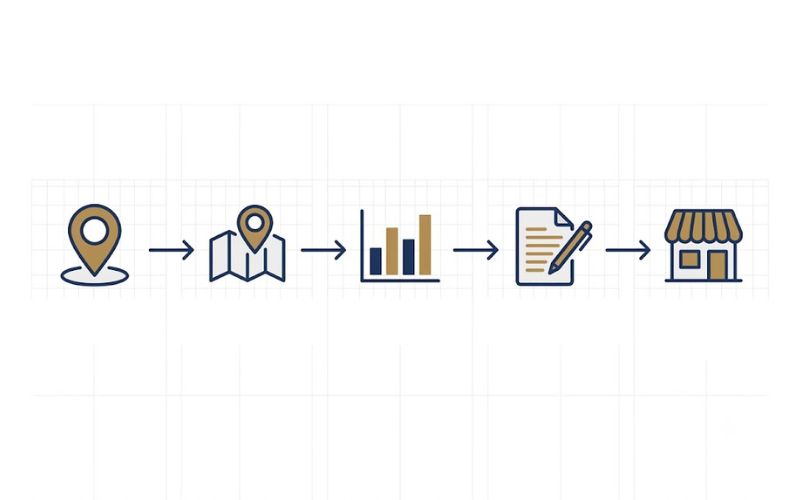
The Renewables Community Benefit Toolkit is five connected tools, not five separate forms. Start with your council's Regional DNA Profile, map the projects touching your LGA, calculate the benchmark range you should expect, build your negotiating brief, then help local business capture the construction-window spend.

Diagram of the five connected modules in the Renewables Community Benefit Toolkit

Start at 1. Return to any step as your negotiation develops — this isn't a form you fill in once.

Proof

See It Run: The Nardoo Shire Pilot

A fictional Queensland council tested all five modules against three concurrent renewable projects — a wind farm, a solar farm, and a solar+BESS hybrid — landing 30 minutes from where three developers were about to set the terms unopposed. The result that matters most isn't a document: it's that the toolkit knew which document not to write yet, twice, before either mistake reached anyone who'd act on it.

$14.7M+Nominal 25-yr CBA value negotiated
5Modules tested end-to-end
1Briefing correctly withheld
9/10QA checks passed before release
Two different modules, two different kinds of caution — both catching a different failure mode before it reached anyone who'd act on it.
See the Full Case Study →

Free Resources: Know What You're Walking Into

Three reference guides — read before your council opens Module 1.

What to Gather Before You Start

Every piece of information you need on hand, organised by module, before you begin.

Download PDF →

What This Toolkit Produces

Every output mapped to the module that creates it — the profile, the map, the benchmark, the brief.

Download PDF →

Real Settled Agreements — Comparables Sheet

Goombi, Western Downs, Lotus Creek and Moah Creek — real, sourced outcomes, one page.

Download PDF →

The Five Modules

1

Regional DNA Profile

Build the master profile for your council or LGA — population, housing and infrastructure capacity, existing strategic priorities. Everything downstream in this toolkit draws on this one document. Anything left blank is flagged for verification automatically, so nothing gets treated as fact before it's confirmed.

Key outputs: Council/LGA baseline profile · foundation document for every other module

Open Tool →
2

Project & Impact Mapper

See which renewable, storage, and transmission projects touch your council, what stage each is at, and the workforce and timeline you're planning around. This is the map the Benchmark Calculator and Negotiation Position Builder both draw from directly.

Key outputs: Project & Impact Map · stage and workforce timeline

Open Tool →
3

Benchmark Calculator

Turn a project's MW or MWh into an expected Community Benefit Agreement value range, checked against real, sourced comparables — not a rule of thumb. Know the number before you sit down at the table.

Key outputs: Floor-to-ceiling CBA value range · sourced comparables table

Open Tool →
4

Negotiation Position Builder

Turn your benchmark and your council's priorities into a costed negotiating brief — the ask, the comparables, and a staged local priority list, ready for the table.

Key outputs: CBA negotiating brief · costed local priority list

Open Tool →
5

Local Business & Community Readiness Pack

Turn the construction window into captured local value — a briefing for local businesses, and a standing plan tracking every funding and supplier channel your council and community can access.

Key outputs: Local Business Readiness Briefing · Standing Community Benefit & Economic Capture Plan

Open Tool →

Legacy Voluntary vs. Legislated Mandatory

Legacy · Locked 2020 $100,000/yr

Western Downs Green Power Hub — a voluntary deal, settled before the law changed.

Current · Under the 2025 law $840,000/yr

Goombi Renewable Energy Hub — ratified 24 April 2026, the first wind farm CBA settled under the new law.

Same state. Same era. The difference wasn't the project — it was whether the council walked in with a benchmark.

How This Works as an Engagement

Paid, direct-to-council, and staged — because a CBA negotiation runs over months, not a single sitting.

STEP 1

Scoping Call

A 30-minute call to confirm your project, stage, and where your council's leverage window actually sits.

STEP 2

CBA Readiness Sprint

Modules 1–3 run through, sourced and QA-checked, into a costed negotiating brief.

STEP 3

Standing Support

Re-run any module as the negotiation moves — the toolkit stays live for the life of the deal.

Book a CBA Readiness Scoping Call

Frequently Asked Questions

What is a Community Benefit Agreement in Queensland?

A Community Benefit Agreement (CBA) is a binding contract between a council and a renewable energy or battery storage developer, covering funding, local infrastructure, workforce and procurement commitments, and monitoring. Wind and solar (≥1MW) projects have needed one since 18 July 2025; standalone battery storage (≥50MW) followed on 12 December 2025. Hybrid solar+BESS projects are covered from the solar trigger date.

When does our council actually have to negotiate one?

The negotiation window opens once the developer's Social Impact Assessment is complete and closes the moment the CBA is signed and the development application is lodged with the State Assessment and Referral Agency. It doesn't reopen once the DA is in — this is the only point where a council has real leverage.

How much should our council expect to receive?

Published Queensland benchmarks sit at roughly $850–$1,050 per MW per year for wind and solar, and around $150 per MWh per year for standalone battery storage. Real outcomes vary sharply with preparation — one 800MW project secured $840,000 a year under the new law, while a comparable legacy deal settled for $100,000.

What's the difference between the Social Impact Assessment and the CBA?

The Social Impact Assessment (SIA) is the developer's mandatory study of the project's effects on the community — housing, workforce, services, and infrastructure. The CBA is the binding agreement negotiated in response to that assessment, setting out what the council and community actually receive. The SIA informs the CBA; it isn't a substitute for it.

Can an existing voluntary agreement be renegotiated under the new law?

Not automatically. Legacy voluntary deals struck before the legislation stay in force as written — they aren't retrospectively upgraded to the new benchmark. The exception is a genuinely new approval trigger, such as a substantial project expansion, which can open a fresh negotiation window under current settings rather than the old ones.

Do we need a consultant, or can our council run this ourselves?

The toolkit is built so council staff can run most of it directly — regional profiling, project mapping, and benchmark calculation are self-serve. The CBA Readiness Pack engagement adds sourced comparables, negotiation strategy, and a QA-checked negotiating brief for councils that want that layer verified before it goes in front of a developer.

How long does the CBA Readiness process take?

It depends on how much groundwork the council has already done and where the project sits in its own timeline. Because negotiations can run over months and get re-opened as facts change, the toolkit is built to be re-entered — most councils move through it in stages rather than one sitting.
Ready to Build Your Council's Negotiating Position?

Book a 30-minute scoping call. We'll show you where your project sits, what your benchmark range looks like, and which module to start with.

Book a CBA Readiness Scoping Call